
The PIT maneuver in GTA 5: landing it, and surviving it
Contact on the rear quarter, then steer into it. The PIT is the most copied and worst-executed move in chases. How to land it, and how to survive one.
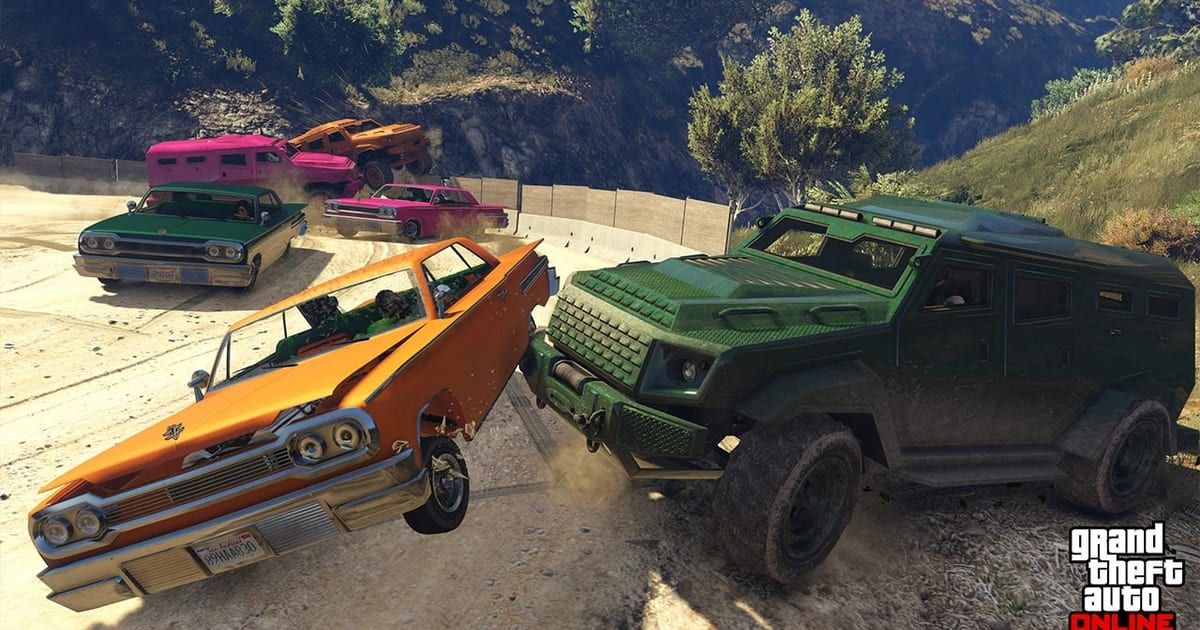
The PIT — Precision Immobilization Technique — is the most imitated and worst-executed move in GTA 5 chases. Everyone has seen the clip: the police car touches the runner’s rear, the runner spins, it’s over. Everyone tries it, and nine times out of ten both cars end up spinning together. Here’s how to do it properly, and — the half nobody practises — how to survive one.
What a PIT actually does
The move is mechanical, not violent. You place your front end against the target’s rear quarter panel, then steer into the car. The contact kills the grip on their rear axle; your lateral push does the rest. The car rotates around its own nose and ends up sideways, usually facing back the way it came.
So it is not a hit. A good PIT is sustained, loaded contact — not a battering ram. If you back off to build momentum and then slam into them, you’re doing something else entirely: you’re shoving them forward, straightening them out, and wrecking your own front end.
Remember the phrasing: a PIT is contact that lasts, not an impact.
Placement: the one thing you can’t get wrong
This is most of the outcome. Your front bumper needs to be on the last third of their car — level with the rear wheel or just behind it.
- Too far forward (mid-door): you’re pushing their centre of mass. They don’t rotate, they just get shoved sideways. You’ve handed them a free line change.
- Too far back (on their bumper): you push them straight ahead. Best case you accelerate them, worst case you launch them somewhere neither of you controls.
- On the rear quarter: maximum leverage, immediate rotation.
Put differently, you need to arrive at their hip, not their bumper and not their door. Which means you must already be offset to one side before you commit — a pursuer sitting dead centre behind can’t PIT, only push.
Speed: the window is narrow
Second variable, and the counter-intuitive one.
- Too fast: you dump all your energy into the rotation. They spin, but so do you. You end up sideways next to a sideways car, and whoever gets going first wins — statistically not the one who started it.
- Too slow: not enough lateral force. You nudge them, they correct, they leave, and you’ve burned your surprise.
- Right: a small closing speed in your favour. Slightly quicker than them at the moment of contact. Not much.
The habit worth building: arrive fast, then ease off just before contact. You keep the momentum without bringing energy you can’t manage.
Steering input: one clean commit, then release
Once contact is established, the steering is a single decisive input toward the inside of their car. Not a gradual squeeze, not a held angle. You turn in, the rotation starts, you release immediately.
Holding the wheel is the most common error after bad placement. As long as you’re steering into them, you stay hooked to them, and their spin becomes yours. The input starts the rotation — that’s all it’s for.
What happens next — the part nobody trains
The PIT succeeds the moment they start to rotate. What you do in the following two seconds decides whether you cash in or share their trip into the barrier.
The rule: don’t follow the rotation. Stay straight.
The instant you feel them go:
- Straighten your wheel, eyes far down the road, not on the target.
- Don’t stamp on the brakes. Panic braking while your front end is still loaded sideways puts you into a spin too.
- Get clear. A spinning car sweeps a huge area, and its rear is coming toward you. You want to be past them, not beside them.
- Then, and only then, slow down and turn around. A sideways car doesn’t get going instantly — you have time.
A perfect PIT that ends in your own spin is a failed PIT. The goal isn’t to stop them; it’s to stop them while you’re still driving.
When not to try it
- In heavy traffic. A spinning target among civilian cars becomes an unpredictable projectile, often aimed at you.
- Downhill. You control your own speed poorly and the energy differential is too big.
- Against a much heavier car. Leverage cuts both ways.
- When you’re already gaining. If you’re closing cleanly, a botched PIT resets everything. Contact is a bet, not a routine.
From the runner’s seat: reading a PIT before it lands
This is the useful half of the article, and almost nobody works on it.
The tell is the offset. A pursuer sitting square behind you isn’t setting anything up. A pursuer who slides to one side and creeps up level with your rear wheel is building a PIT. At that exact moment you have only an instant to act.
What to do with it:
- Never run a predictable straight line. A slightly weaving line stops them settling into position without moving themselves — and forces a correction precisely when they want to commit.
- Move toward them as they reach your hip. Counter-intuitive, but it kills the angle: they aim at a quarter panel that isn’t there any more, catch your flank instead, and door contact doesn’t rotate much.
- Avoid long, open, fast sections. The freeway, the LSIA tarmac, a straight run down the concrete channel of the Los Santos River — all prime PIT terrain. Downtown alleys aren’t: there’s no room to get alongside you.
- Don’t brake to “let them past” unless you’ve genuinely read their commitment. A mistimed lift feeds you straight into the contact.
Saving the car after a successful PIT
It will happen. The gap between an average player and a good one is what it costs afterwards: several seconds, or almost nothing.
- Don’t brake. It’s the natural reflex and the worst one. Braking kills what little rear grip you had and turns a rotation into a full spin.
- Countersteer immediately, into the slide — rear goes right, you steer right. Fast, but not violent: an over-correction just throws you the other way.
- Ease off the throttle without dumping it. A sharp lift unsettles the car at the worst possible moment (the basics are in our driving fundamentals).
- Look where you want to go, not at the wall. Your line follows your eyes, video game or not.
- As it settles, straighten and get back on the power decisively. A clean exit from a half-saved PIT keeps you in the chase; a timid one gets you caught.
And if you do end up fully sideways: don’t fight to resume your original heading. Leave in the direction the car is already pointing and turn around later. It costs you far less time — and often your pursuer has carried straight on.
Practising it honestly
The PIT is a calibration skill: it comes from repeating the same contact at the same speed until the window becomes obvious. Take a forgiving car — an Elegy RH8 or a Sultan RS — and run ten engagements on the same stretch of road. The speed window draws itself.
And remember it doesn’t apply universally: against a bike, contact doesn’t rotate anything, it ejects the rider — a topic of its own, covered in bike or car in a chase.
Where to actually use this
The PIT only matters against someone who can see it coming. Against AI it’s a party trick; against a player it’s a decision — with a risk, a window, and a penalty for missing.
That’s exactly the format of Chased: short 1v1 hunter-versus-hunted duels, in a randomly drawn car that’s identical for both players. Nobody has a hardware advantage, so the only question is who puts their contact in the right place — and who can save their own car. A style score rewards drifting and near-misses, and a seasonal ELO ladder sorts everyone honestly.
Next up: the 10 mistakes that cost you a 1v1 chase and the best places to lose a pursuer in Los Santos.