
handling.meta explained: why the same car drives differently on every server
An Elegy isn't an Elegy. Every FiveM server can rewrite the physics of every vehicle — here's how that works, why they do it, and what it costs you.
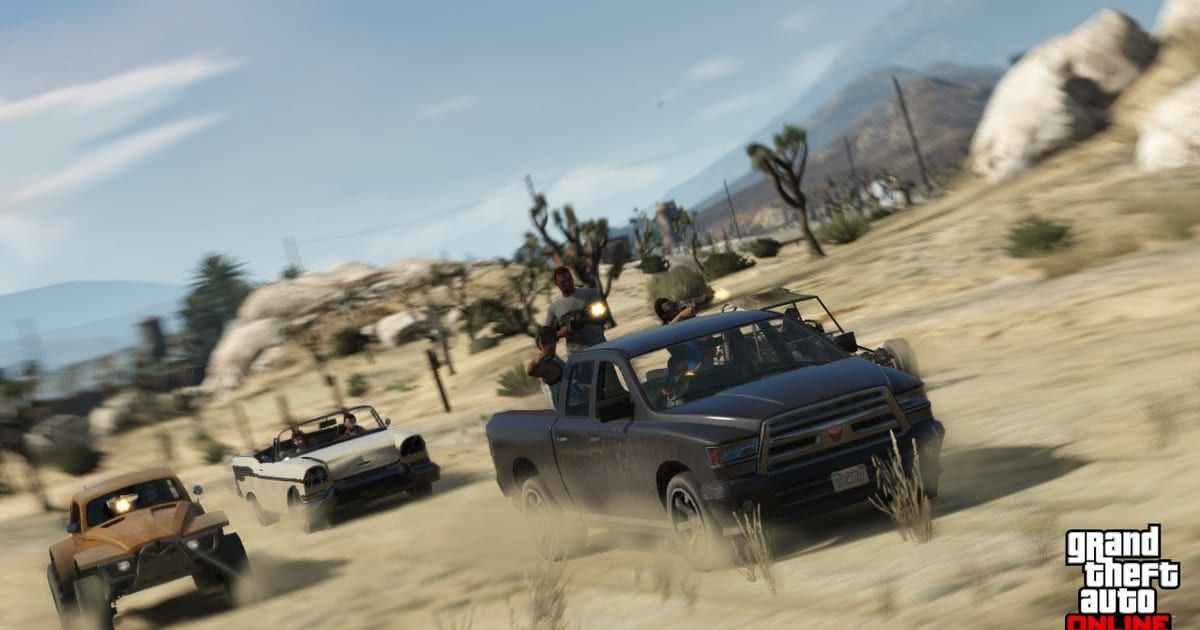
You know your car inside out. You join a different FiveM server, take the exact same model, and nothing matches: it rotates too much, or not enough, it brakes like a truck, it lets go where it used to grip. You didn’t forget how to drive. The car changed.
The whole explanation lives in one file: handling.meta.
What handling.meta actually is
In GTA 5 a vehicle is two separate things: a 3D model (body, wheels, materials) and a set of physics parameters describing how that object behaves. The second one lives in a file called handling.meta.
That file holds, for every vehicle, a list of values: its mass, how that mass is distributed, how power reaches the wheels, how the tyres grip, how far the front wheels can turn, how hard the brakes bite, how stiff the suspension is, how it takes damage. It’s the real spec sheet — not the bars in the in-game menu, which are a marketing simplification.
And the crucial part: any FiveM server can replace that file. It’s one of the most common modifications there is, because it needs no 3D model, no script, just numbers.
The consequence is that a vehicle name is an identifier, not a promise. An Elegy RH8 on server A and an Elegy RH8 on server B share a body shell and nothing else.
The main families of settings
Without pretending to be exhaustive — the file has a lot of fields, some genuinely obscure — these are the families that explain most of what you feel through the wheel.
Mass and centre of gravity
Mass sets inertia: how much the car resists changing direction, and what happens when it hits another one. The centre of gravity decides how weight moves under braking, acceleration and cornering load.
What it changes for you. A lowered centre of gravity gives a car that plants itself and barely rolls — the typical setup on servers that want clean, fast driving. A high centre of gravity gives you weight transfer, which means movement, which means slide — exactly what drift-oriented servers are after.
It’s also why on some servers a car flips over the smallest kerb while elsewhere the same car stays glued down.
Grip and traction curves
This is the most decisive group of values. It describes how much grip the tyres have and, more importantly, how that grip goes away once you pass the limit.
Two cars can have identical peak grip and behave like opposites: one loses it progressively — you feel the rear settle, you steer the slide — and the other loses it all at once, with no warning. That is precisely the difference between a car you can drift and a car that betrays you.
What it changes for you. This is what turns one Elegy into a bar of soap and another into a rail. It’s also the setting your reflexes have internalised the most, so it’s the one that disorients you hardest when it changes.
Front/rear torque split
A single value decides whether the vehicle is rear-wheel drive, front-wheel drive or all-wheel drive. It states how much power goes to each axle.
What it changes for you. Enormously, and with no warning at all. A server can turn a stock RWD car into AWD — it becomes more stable, it fires out of corners, it forgives, and it becomes much harder to get sideways. Or the reverse: an AWD car dropped back to pure RWD becomes playful and slippery.
This is the most invisible field of the lot: nothing tells you, and you spend three corners wondering why the car won’t do what you asked. What each drivetrain means in practice is covered in how to drive better in GTA 5.
Steering lock
How far the front wheels can turn. A generous lock gives a car that rotates tightly and lets you catch big slides on opposite lock. A reduced lock gives calmer, less nervous driving that catches nothing.
What it changes for you. This single value decides whether drifting is accessible or basically impossible on a server. Drift servers almost always raise it — see our drift techniques.
Brake force
Deceleration power plus the front/rear bias. Very strong brakes shorten every distance you know and move your braking point on every corner on the map. A heavily rearward bias makes the car unstable under braking — useful to initiate rotation, dangerous if you’re not expecting it.
Suspension
Stiffness, travel, ride height. This decides what happens when the road isn’t flat: kerbs, bumps, dirt. A stiff, low setup is fast on tarmac and catastrophic the moment you leave it; a soft setup absorbs everything and moves more under load.
What it changes for you. It’s what determines whether cutting across a bank or a median is a tactical option or the end of your run.
Why servers change any of this
Three main reasons, and they don’t contradict each other:
- Balance. GTA 5’s stock physics are wildly uneven between classes: some cars are outliers, others are unusable. A competitive server rewrites handling to compress the gaps, so a chase is decided by the driver rather than by the catalogue.
- The driving style they want. A drift server wants weight transfer, opposite lock and controllable slides. A racing server wants grip and precision. Those are literally opposite settings in the same file.
- Realism and roleplay. Plenty of RP servers want cars that feel their weight, brake like real cars and punish arcade driving. Others want emergency vehicles to behave distinctly from civilian ones.
On top of that there’s a commercial reality: handling is a server’s main lever of differentiation. It’s why you can “feel” a server within the first few minutes.
What this means for you as a player
Your reflexes don’t transfer. That’s the practical conclusion, and it’s harsher than it sounds. What you call “knowing how to drive an Elegy” is really a set of calibrated reference points: your braking marker, how much throttle you can feed in at the apex, the speed at which the rear lets go, how much opposite lock you need. Every one of those is indexed to one specific handling file.
When you change server you keep your principles — brake in a straight line, look far ahead, manage weight transfer — and you lose your numbers. It’s the numbers that need recalibrating, and that takes one session, not ten.
How to do it fast:
- Three emergency stops in a straight line from high speed. You get your braking marker back immediately.
- Provoke a deliberate slide somewhere open and watch how it arrives: progressive or sudden. That’s the single most useful piece of information available.
- Take a tight corner with early throttle. If it pushes wide or the rear steps out, you’re not on AWD; if it hooks up and fires out, you probably are.
- Deliberately mount a kerb. You’ll know instantly whether cutting is an option here.
One more thing: handling isn’t the only variable that shifts between servers. The game build matters too — see FiveM Legacy or Enhanced — as do weather settings, which change grip in real time (changing the weather in GTA 5 and FiveM).
Handling as a fairness problem
There’s a deeper consequence. On most servers, two players facing each other aren’t just in two different cars: they’re in two different physics models. Whoever spent hours learning the exact flaws of their vehicle holds an advantage that driving skill alone doesn’t explain — and that never shows up in the result.
That’s the problem we removed on Chased: in our 1v1 hunter-versus-hunted duels, the car is randomly drawn and identical for both players. Same model, same handling, same behaviour down to the last decimal. Nobody knows “their” car better than the other, nobody buys an edge, and the result measures exactly one thing: driving. A style score rewards drifting and near-misses, and a seasonal ELO ladder puts everyone where they belong.
Next: the best cars for police chases and the 10 mistakes that cost you a 1v1 chase.